

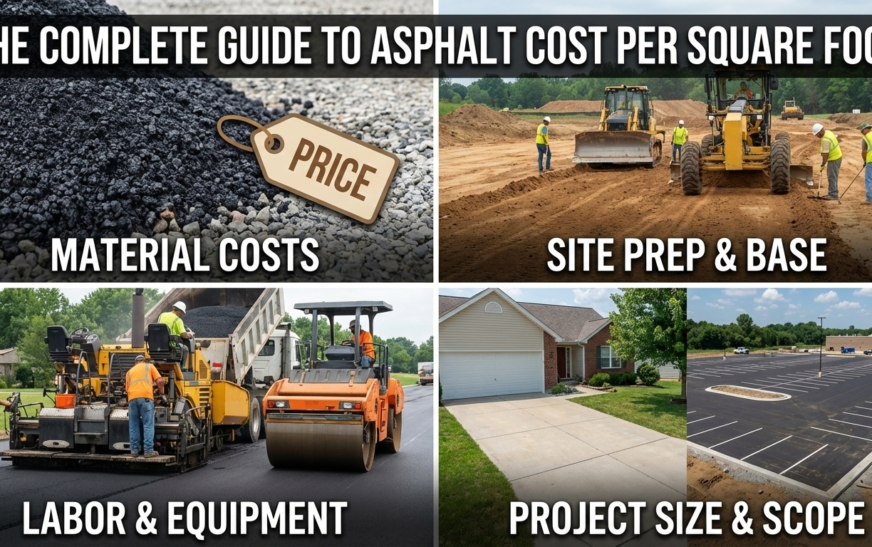
Introduction: Navigating the Investment in Asphalt Pavement
When planning a paving project, the question of “asphalt cost per square foot” is almost always the first and most important consideration. Asphalt is a popular choice for driveways, parking lots, and walkways due to its durability, smooth finish, and relative cost-effectiveness. However, providing a single, universal price is impossible because the final cost is a composite of many factors. Therefore, this comprehensive guide will break down the national average cost, explore the key variables that impact your price, explain what’s included in a professional quote, and offer practical tips for managing your project budget effectively. Ultimately, understanding these components is the best way to ensure you receive fair value for a high-quality, long-lasting pavement.
Chapter 1: The National Average and Real-World Price Ranges
To establish a baseline, it’s helpful to look at general figures, but with the immediate understanding that these are starting points.
- Average Installed Cost: Nationally, the average cost to install new asphalt pavement ranges from $7 to $15 per square foot. For a standard two-car driveway (approximately 600 sq. ft.), this translates to a total project cost between $4,200 and $9,000.
- The Variability Factor: Importantly, this is a wide range for a reason. A simple, straightforward installation in an area with easy access might land at the lower end. Conversely, a complex project on difficult terrain with premium materials will trend toward the higher end.
- Cost Breakdown: Typically, this installed price is not just for the black asphalt material itself. It is a “turnkey” price that includes the cost of materials, equipment, labor, and the contractor’s overhead and profit.
Chapter 2: The 5 Key Factors That Determine Your Final Cost
Your specific price asphalt cost per square foot is dictated by a combination of project-specific and market conditions.
2.1. Project Size and Complexity
Generally speaking, larger projects often benefit from a lower cost per square foot due to economies of scale. Mobilizing heavy equipment is a fixed cost; spreading it over 5,000 sq. ft. is more efficient than over 500 sq. ft. Furthermore, the shape and terrain matter greatly. A simple, rectangular driveway on flat land is less expensive to pave than a winding driveway on a steep slope that requires significant grading, additional excavation, or specialized equipment.
2.2. Material Costs and Asphalt Thickness
This is one of the most critical variables. Asphalt is sold by the ton, and its price fluctuates with the cost of crude oil. More significantly, the required thickness of the asphalt layer directly impacts material usage and cost.
- Residential Driveways: Usually require a 2- to 3-inch compacted thickness over a properly prepared gravel base.
- Commercial Parking Lots: Often need 3+ inches to withstand heavy traffic and loads.
As a rule of thumb, increasing the thickness by just one inch can increase the material cost by 25-30%.
2.3. Site Preparation and Base Work
Perhaps the most overlooked yet vital cost factor is what happens before the asphalt is ever poured. A proper installation requires a stable, compacted base of aggregate (gravel), typically 4-8 inches thick. If your existing site requires:
- Tree or Debris Removal
- Significant Excavation or Grading
- Drainage Correction
Then, the site preparation costs will rise accordingly. Skipping or cheaping out on a proper base is the leading cause of premature asphalt failure, making it a poor place to cut corners.
2.4. Regional Location and Labor Rates
Costs vary significantly by region. Labor rates are higher in metropolitan areas and regions with a high cost of living. Additionally, the distance from the asphalt mixing plant affects delivery fees. Finally, local permitting fees and disposal costs for old material can add to the project total.
2.5. Additional Features and Finishing
The final price includes finishing touches. Standard finishing includes compaction and rolling. Optional features that add cost per square foot include:
- Sealcoating: A protective layer applied after the asphalt cures (usually 30-90 days).
- Drainage Improvements: Adding curbs, trenches, or catch basins.
- Line Striping: Essential for parking lots.
Chapter 3: Understanding a Professional Quote and Avoiding Pitfalls
A detailed quote protects you. Here’s what to look for and what to avoid.
3.1. What Should Be in a Quote?
A reputable contractor will provide a written, detailed quote that specifies:
- Total square footage of the project.
- Asphalt thickness (in inches, after compaction).
- Details of base preparation (gravel type and depth).
- A clear line-item breakdown of costs (materials, labor, excavation, etc.).
- Project timeline and payment schedule.
- Warranty information for materials and workmanship.
3.2. Red Flags and How to Save Smartly
Be extremely wary of quotes that are significantly lower than all others. This often signals the use of inferior materials, inadequate thickness (“thin overlay”), or poor base preparation. To save money intelligently:
- Plan your project for the off-season (late fall or early spring in many areas), as contractors may offer better rates.
- Obtain 3-4 detailed quotes from licensed, bonded, and insured contractors with strong local references.
- Focus on longevity. Investing in proper thickness and base work saves money on costly repairs down the road.
Chapter 4: Long-Term Value and Conclusion
While the initial asphalt cost per square foot is a major investment, it’s crucial to view it as a long-term asset. A properly installed asphalt pavement, maintained with regular sealcoating (every 2-3 years) and prompt crack repair, can last 15-25 years or more. Therefore, the true “cost” is better measured as “cost per year of service.”
In conclusion, the answer to “how much does asphalt cost per square foot?” is: It depends on your unique project. By understanding the factors of size, materials, site work, and location, and by partnering with a qualified contractor, you can navigate the quoting process with confidence. Remember, the goal is not to find the absolute cheapest price, but to secure the best value: a smooth, durable, and professionally built surface that enhances your property for decades to come.