
Decoding the Modern Mantra of Reassurance
In the fast-paced, often anxiety-inducing world of digital communication, a powerful four-letter acronym has emerged as a beacon of calm and casual reassurance: dwbi More than just shorthand, dwbi represents a modern philosophy a quick, text-friendly adaptation of a timeless message popularized by Bobby McFerrin’s iconic song. It’s the digital equivalent of a pat on the back, a verbal shrug, or a comforting smile. This comprehensive guide will unpack everything you need to know about dwbi its clear meaning, its nuanced usage across different contexts, its psychological impact, and why this specific phrase has become a cornerstone of laid-back, supportive digital dialogue.
What Does dwbi Mean? The Clear-Cut Definition
dwbi is an acronym that stands for “Don’t Worry, Be Happy.”
Let’s break down the components and the essence they convey:
- “Don’t Worry”: This is the directive of reassurance. It’s an instruction to release anxiety, to let go of a specific concern or a general state of stress. It acknowledges that a worry exists but advocates for its dismissal.
- “Be Happy”: This is the positive redirection. It doesn’t just stop at negating the worry; it actively promotes a shift in focus toward a more positive emotional state. It’s aspirational and optimistic.
The Core Vibe: Unlike more clinical reassurances like “It’s fine” or “No problem,” dwbi carries a distinct, almost musical lightness. It’s inherently casual, friendly, and infused with a spirit of easy-going optimism. It’s used to diffuse tension, minimize drama, and affirm that things are, or will be, okay.
Pronunciation and Variations
While primarily a written acronym, it’s sometimes pronounced letter-by-letter as “D-W-B-I” in spoken slang. You may also encounter the even more abbreviated DWB though dwbi is the standard and most recognizable form.
The Evolution of dwbi: From Chart-Topping Song to Texting Staple
The journey of dwbi from a global pop-culture phenomenon to a texting essential is a fascinating case study in how language absorbs and repurposes cultural touchstones.
1988: The Musical Origin – Singer Bobby McFerrin releases the a cappella song “Don’t Worry, Be Happy.” Its infectiously simple melody and straightforward, upbeat philosophy catapult it to number one on the charts worldwide. The phrase enters the global lexicon as a synonym for casual optimism.
1990s-2000s: The Migration to Digital – As the internet and SMS texting matured, users sought efficient ways to convey tone and complex phrases. The already popular and succinct mantra “Don’t Worry, Be Happy” was a perfect candidate for abbreviation. dwbi emerged organically in chat rooms, instant messages, and early text conversations as a quick way to offer comfort or downplay a minor issue.
2010s-Present: Mainstream Integration – With the rise of social media and the constant, rapid-fire nature of communication on platforms like Twitter, Instagram, and WhatsApp, dwbi solidified its place. It became a go-to response for everything from apologizing for a late reply to reassuring a friend about a small mistake. Its usage expanded beyond its musical roots, becoming a standalone piece of digital lingua franca.
When and How to Use dwbi: A Contextual Etiquette Guide
Using dwbi effectively is all about matching its casual, reassuring energy to the appropriate social situation. Its power lies in its tone, which can be misinterpreted if used in the wrong context.
Perfect Scenarios for dwbi:
- To Accept an Apointment Gracefully: It’s the ultimate “no big deal” response.
- Friend: “So sorry I’m 5 mins late!”
- You: “dwbi! Just got here myself.”
- To Downplay a Minor Mistake or Issue: When you want to stop someone from over-apologizing or fretting.
- Colleague (on chat): “Ugh, I think I sent you the wrong file link.”
- You: “dwbi, found the right one. All good!”
- To Offer Casual Reassurance: For everyday, low-stakes worries.
- Friend: “A bit nervous about this presentation.”
- You: “You’ve got this! dwbi 😊”
- To Conclude a Potential Conflict on a Positive Note: To deliberately lower the temperature.
- In a group chat planning an event: “Looks like we have different ideas on the venue, but dwbi, we’ll figure it out.”
When to Avoid or Think Twice About Using dwbi:
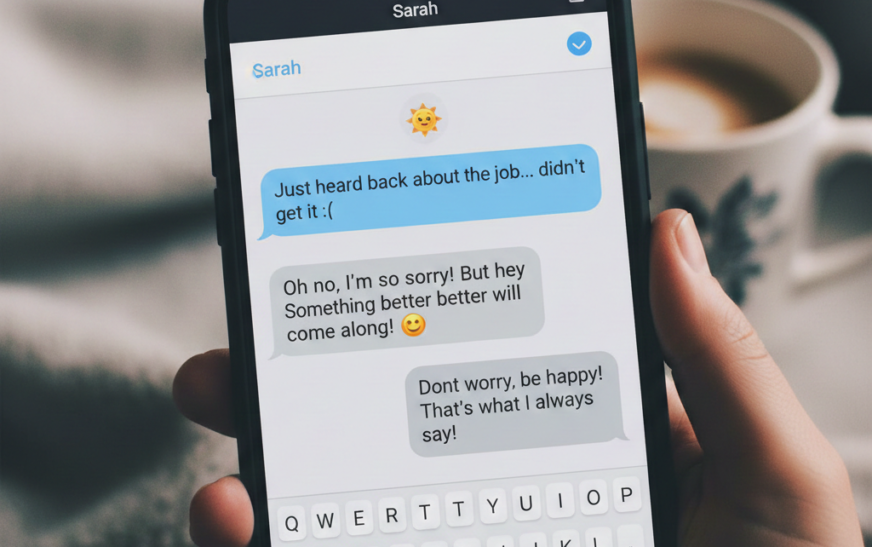
- In the Face of Serious Distress or Trauma: If someone is sharing a genuine, deep worry—a health crisis, a significant loss, a major life stressor—dwbi can come across as dismissive, trivializing, and tone-deaf. It invalidates the gravity of their feelings.
- Instead of: “My dog just passed away.” / “dwbi.”
- Use: “I’m so sorry to hear that. That’s really hard.”
- In Formal or Professional Correspondence: Never use dwbi in emails to clients, superiors, or in official reports. It is strictly for informal, peer-to-peer or friendly communication.
- When Genuine Accountability is Needed: If a serious error has occurred that requires correction and responsibility, dwbi can seem like an attempt to avoid addressing the problem.
- If You Are Actually Worried or Upset: Using dwbi when you are clearly not okay can send mixed signals and hinder honest communication. It’s okay to use more direct language like, “Actually, I am a bit worried, can we talk?”
Stylistic Nuances and Pairings:
- Punctuation & Emojis: These define the tone.
- dwbi! (With an exclamation): Energetic, cheerful reassurance.
- dwbi (Lowercase): Ultra-casual, relaxed vibe.
- dwbi 🙂 or dwbi 😌: Warm and smiley.
- dwbi… (With ellipsis): Can suggest a thoughtful, sigh-of-relief kind of reassurance.
- Common Pairings: It’s often used with other affirming phrases:
- “No worries, dwbi!”
- “All good, dwbi.”
- “Haha, dwbi about it.”
The Psychology of dwbi: Why This Phrase Resonates
The enduring popularity of dwbi isn’t accidental. It taps into fundamental psychological needs within digital communication, which often lacks non-verbal cues.
- Anxiety Reduction (for the Receiver): It directly addresses the brain’s worry center with a clear, simple command: “Stop the spiral.” In a low-stakes context, this can be genuinely effective at calming minor social anxieties.
- Conflict Avoidance & Social Smoothing (for the Sender): dwbi is a powerful tool for de-escalation. It signals a desire for harmony and communicates that the sender is not upset, thereby preventing misunderstandings from growing.
- Tone Transmission in a Text-Dominant World: It injects a specific, positive, and laid-back tone into messages that might otherwise be read as neutral or even passive-aggressive. It acts as a tone indicator.
- Efficiency of Empathy: It offers a form of lightweight empathy—acknowledging a concern exists and immediately offering the solution (choose happiness)—all in four characters. It’s empathy optimized for speed.
dwbi in the Ecosystem of Reassurance Acronyms
dwbi sits within a family of acronyms and phrases used to calm, reassure, and affirm in digital spaces.
- The “No Problem” Family: NP (No Problem), NBD (No Big Deal), NVM (Never Mind). These are more focused on negating the issue itself. dwbi is more focused on the person’s emotional state about the issue.
- The Optimism Family: YOLO (You Only Live Once), HAK (Hugs And Kisses). dwbi shares their positive outlook but is more directly targeted at an existing worry.
- The Dismissive Family: IDC (I Don’t Care), IDK (I Don’t Know). dwbi can sometimes border on dismissive if used incorrectly, but its intent is fundamentally kind, unlike the genuine indifference of IDC.
dwbi’s unique value is its combination of emotional reassurance (don’t worry) with positive action (be happy).
Cultural Impact and the Line Between Reassurance and Invalidiation
While dwbi is a cultural staple, its usage invites a critical conversation about “toxic positivity”—the overgeneralization of a happy, optimistic state that denies the validity of real emotional experience.
The phrase “Don’t Worry, Be Happy” itself has been critiqued for potentially oversimplifying complex emotions. The acronym dwbi, when used carelessly, can fall into the same trap. The key is contextual intelligence. It is a perfect tool for smoothing over minor social friction but a poor and potentially harmful tool for responding to real pain.
The most adept digital communicators understand that dwbi is for papercuts, not deep wounds. They know when to switch from this efficient shorthand to the more labor-intensive, but necessary, language of active listening and deep empathy.
The Future of dwbi: A Lasting Digital Heirloom
Given its roots in a universally known song and its perfect fit for the needs of informal digital dialogue, dwbi shows every sign of permanence. It has transcended its musical origin to become a self-sustaining piece of language. While new slang will always emerge, the core human needs to reassure and be reassured—quickly and kindly—will not change. dwbi fulfills those needs with remarkable efficiency and a touch of nostalgic cheer.
It may not be used by every generation in the same way (Gen Z might pair it with specific memes or use it ironically), but its fundamental meaning is likely to endure as long as we continue to tell each other, in so many words, to ease up and look on the bright side.
Conclusion: The Gentle Art of Not Sweating the Small Stuff
dwbi is more than an acronym; it’s a micro-ritual of kindness in the digital space. It represents a conscious choice to prioritize peace over perfection, connection over contention, and lightheartedness over stress for minor affairs. It is the linguistic embodiment of the very useful life skill of not sweating the small stuff.
Mastering dwbi is about more than knowing its definition. It’s about developing the social discernment to recognize when a situation calls for its casual grace and when it demands a more substantial, thoughtful response. In the right context, those four letters can dissolve tension, strengthen bonds, and spread a little of the easy-going joy their source material intended. So the next time a friend over-apologizes for a tiny mishap, remember the power of dwbi a small, swift reminder that sometimes, the best response is simply to smile, let it go, and keep the conversation moving happily forward.