
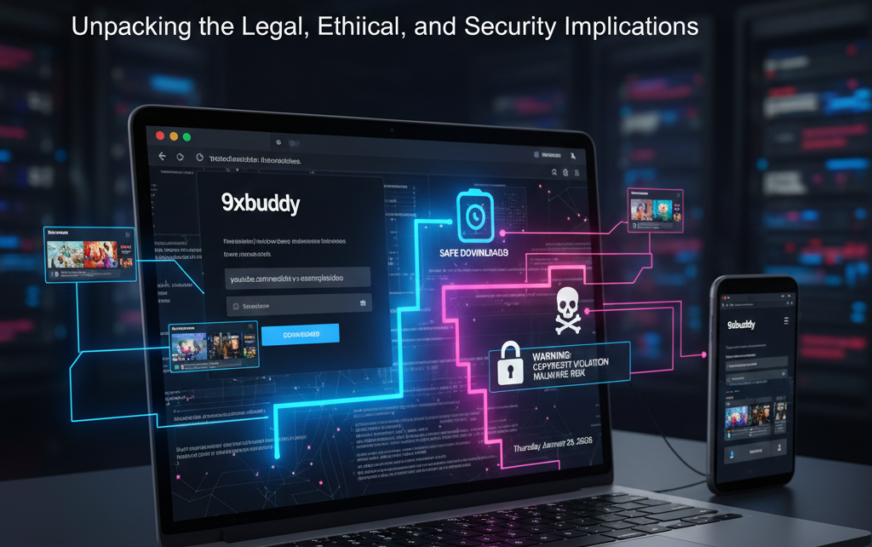
We live in an era of ubiquitous streaming. Yet digital content remains fleeting. This reality fuels a powerful instinct: the desire to preserve videos for offline viewing. Whether saving an educational lecture, a vital tutorial, or memorable entertainment, users seek to download content directly. One prominent solution is 9xbuddy a web-based service. It promises a simple fix: paste a URL, download a video. Its straightforward interface and broad compatibility drive its popularity. However, this tool operates in a complex space. It sits at the intersection of convenience, copyright law, and cybersecurity. Therefore, 9xbuddy represents more than a simple tool. It embodies the tension between user utility and digital rights. This comprehensive guide delves into its mechanics. We analyze its trending status, unpack the legal and security implications, and chart a course toward safer, ethical media management.
What is 9xbuddy ? Inside the Downloader Ecosystem
9xbuddy is not a single website. It is a collective term for a network of free, browser-based video downloading services. Their core proposition is technical simplicity. Users copy a video URL from a supported platform like YouTube, Vimeo, or Facebook. They then paste it into 9xbuddy’s search bar. The service parses the video page. It extracts the direct media stream and presents download options. These typically include various resolutions and file formats like MP4 or MP3.
Critically, 9xbuddy does not host content. It acts as a “middleman” parser. It leverages the public accessibility of video streams. This distinction is central to its operation and legal position. The technology uses web scraping. It locates media files made temporarily available by the content delivery networks (CDNs) of the original platforms. This process circumvents native download functions and digital rights management (DRM) protections.
Who Uses It and Why? The Driving Demand
The use cases for 9xbuddy are diverse. They stem from practical necessity and the limits of streaming ecosystems.
- Accessibility and Offline Viewing: Many regions have unreliable or expensive internet. Downloading for offline playback becomes a necessity. Students, professionals, and travelers use these tools to save content. This allows consumption without data constraints.
- Content Preservation: The digital landscape is ephemeral. Creators delete videos; platforms remove content. Archivists, researchers, and everyday users employ downloaders to preserve significant media.
- Creative Remix and Fair Use: Some users leverage these tools for critique, commentary, or education. This can align with “fair use” in copyright law. However, the download act itself usually violates the platform’s Terms of Service.
- Circumventing Platform Limits: Users frustrated with platform restrictions turn to third-party downloaders. They seek to avoid unskippable ads or gain a controlled viewing experience.
- Content Portability: People want to move content between devices. They wish to free media from the walled gardens of specific apps.
Why 9xbuddy Trends: Technology Meets Culture
The prominence of 9xbuddy signals broader shifts in media consumption.
- The Streaming Paradox: We shifted from purchasing media to subscribing for access. This creates a “possession deficit.” Users pay fees but own nothing. Content can disappear anytime. Downloaders represent a pushback against this model.
- Democratization of Tools: Web scraping technology became more accessible. Services like 9xbuddy package this complexity into a simple paste-and-click model. It requires no technical knowledge.
- Platform Agnosticism: Content is now fragmented across dozens of platforms. A tool that downloads from many sources fills a utility gap. It positions itself as a consolidator.
- Viral Media and Memes: The rapid spread of clips and memes relies on quick downloading and editing. Downloaders serve as critical, if legally ambiguous, infrastructure for remix culture.
The Significant Risks and Critical Drawbacks
The utility of 9xbuddy is clear. However, using it carries substantial risks.
1. Legal and Copyright Dangers
This is the foremost risk. Downloading copyrighted content without permission is illegal in most jurisdictions. Some uses may qualify as fair use. Yet the act of circumventing protection measures often violates laws like the DMCA. Users can face legal consequences, not just the service.
2. Severe Security and Privacy Threats
Free online tools rely on aggressive advertising. These sites are littered with pop-up ads and redirects. These can lead to malicious websites hosting phishing kits or malware. The real “download” button is often disguised among fake ones. This leads to unintended software installations. Furthermore, these sites may log user IP addresses and submitted URLs.
3. Malware and Software Bundling
The downloaded file is not always just a video. A documented risk exists of files bundled with trojans or ransomware. Downloading promoted software or extensions can compromise a user’s entire system.
4. Unreliable Quality and Functionality
Platforms like YouTube constantly update their code and DRM. Downloader services play a cat-and-mouse game. Downloads frequently fail. They may offer only low-resolution versions or deliver corrupted files. The service is inherently unstable.
5. Ethical Harm to Creators
Most online video creators rely on platform monetization like ads. Downloading content en masse deprives them of viewership metrics and income. This undermines the sustainable creative ecosystem.
6. Violation of Platform Terms
Using any third-party download tool violates the Terms of Service of every major platform. This can lead to account suspension or permanent termination.
Ethical and Legal Alternatives for Downloading
Legitimate pathways exist to save online content safely.
- Utilize Official Platform Features: Many platforms now offer legal downloads.
- YouTube Premium allows official offline downloading in the app.
- Streaming Services like Netflix and Disney+ permit offline downloads for subscribers.
- Educational Platforms like Coursera provide downloadable resources for paid courses.
- Support Creators Directly: For valued content, seek official purchase options. Many creators sell digital downloads on Vimeo On Demand, Gumroad, or Patreon. This supports them and grants a legal, high-quality copy.
- Employ Open-Source Tools (For Permitted Content): For content you own or that is public domain, consider reputable software like yt-dlp. This command-line tool offers transparency but requires technical skill. It does not change copyright infringement issues for protected content.
- Use Browser-Based Screen Recording: For personal archives under fair use, screen recording (with OBS Studio) is a more defensible method. It records the output rather than breaking encryption.
- Leverage Browser Extensions with Caution: Some extensions are less malicious than sites. However, they still violate Terms of Service. Vet them meticulously and use only for content you have clear rights to archive.
Frequently Asked Questions (FAQs)
Q1: Is using 9xbuddy illegal?
A: Legality is complex. The service operates in a grey area. However, the user’s action of downloading copyrighted content without permission is generally illegal. It violates copyright law and platform Terms of Service. Individual legal risk is typically low but not zero.
Q2: Can I get a virus from 9xbuddy ?
A: Yes, the risk is very high. These sites are hubs for malicious advertising. Fake download buttons can trigger malware or spyware installations. An ad-blocker does not fully mitigate this risk.
Q3: Why does 9xbuddy fail or offer low quality?
A: Video platforms actively update encryption to block scrapers. 9xbuddy parsers constantly play catch-up. When they cannot break new encryption, downloads fail. They may also only access lower-resolution, less protected streams.
Q4: Are there safe alternatives to 9xbuddy ?
A: Truly safe alternatives are official platform features (YouTube Premium) or buying from the creator. Tools like yt-dlp are safer from malware but don’t resolve copyright issues for protected work.
Q5: What if I’ve already used these sites?
A: Run a full system scan with reputable antivirus software. Change important account passwords. Monitor accounts for suspicious activity. Consider a browser reset to clear malicious data.
Conclusion: Choosing Responsibility
In conclusion, 9xbuddy is a symptom of a deeper conflict. It highlights the struggle between user control and intellectual property frameworks. The tool provides undeniable utility for education and preservation. Yet it builds this utility on a foundation of legal peril, cybersecurity danger, and ethical compromise.
The path forward requires conscious digital citizenship. We must recognize that online videos are often copyrighted products of labor. Prioritizing official features, supporting creators directly, and using secure software for permissible archival are safer choices. More importantly, they are choices that sustain the creative ecosystems we value. Ultimately, we must shift the question from “How can I download this?” to “What is the right way to own or interact with this content?” Answering this thoughtfully is key to navigating the digital world with both competence and integrity.