

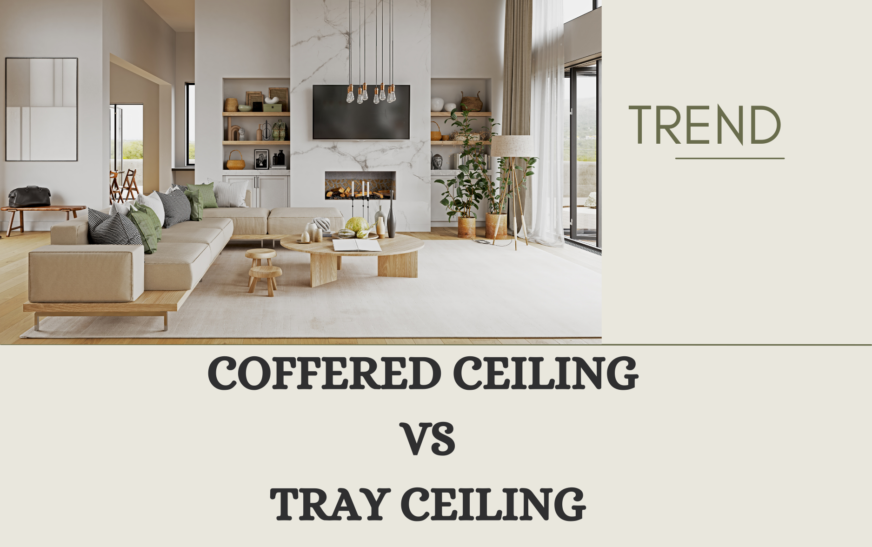
When planning a room’s aesthetic, we often focus on floors, walls, and furniture, neglecting the powerful potential of the “fifth wall” the ceiling. Two of the most dramatic and popular architectural treatments for elevating this space are the coffered ceiling and the tray ceiling. While both add depth, character, and significant value to a home, they achieve this through distinctly different structural and visual philosophies. This article will explore the key differences, applications, and considerations between coffered ceiling vs tray ceiling providing you with the knowledge to choose the perfect crowning detail for your space.
Decoding the Designs: Core Definitions
Before comparing, it’s essential to understand the fundamental structure of each ceiling type.
What is a Coffered Ceiling?
A coffered ceiling is a grid of sunken panels, often square or rectangular, set into a pattern of intersecting beams. The word “coffer” literally means “indentation” or “recess.” Historically used in ancient Greek and Roman architecture to reduce the weight of stone ceilings, today it is a symbol of craftsmanship and grandeur. The design creates a series of three-dimensional, geometric cells that project a sense of orderly sophistication and solidity.
What is a Tray Ceiling?
Conversely, a tray ceiling (also known as a recessed or inverted ceiling) features a central section that is raised or elevated above the perimeter of the ceiling, creating a shape reminiscent of an inverted tray. This design typically uses a single, broad recess that steps up in one or more tiers. The effect is a floating, layered look that draws the eye upward and often creates a feeling of airiness and expanded space.
Key Differences: Structure, Style, and Impact
Understanding their contrasting approaches is key to deciding which suits your project coffered ceiling vs tray ceiling
Visual and Spatial Effect
- Coffered Ceilings command attention with intricate, textured detail. They bring the ceiling visually lower, creating a sense of intimacy, groundedness, and rich paneling. They are assertive and work best in rooms that can handle their strong presence.
- Tray Ceilings aim to lift the space. By raising the central portion, they create a vault-like effect that makes a room feel taller and more open. The look is generally more modern, serene, and less busy than a coffered design.
Architectural Compatibility
- Coffered ceilings are classic companions to traditional, formal, or Tudor-style homes. They pair beautifully with libraries, studies, formal dining rooms, and living rooms with higher ceilings (9 feet or more).
- Tray ceilings are more versatile, seamlessly integrating into both traditional and contemporary designs. They are exceptionally popular in master bedrooms, dining rooms, and modern kitchens, often serving as a subtle frame for a statement light fixture.
Complexity and Cost
- Coffered ceilings are typically more labor-intensive and expensive. Construction involves building a grid of beams (which can be structural or applied) and fitting panels between them. Custom millwork increases the cost significantly.
- Tray ceilings are generally less complex to construct. They are often built using furring strips to create the raised framework, which is then drywalled. This makes them a more cost-effective option for achieving high-impact ceiling drama.
Pros and Cons: A Balanced View
Each option carries its own set of advantages and practical considerations coffered ceiling vs tray ceiling
Coffered Ceiling
Pros:
- Unmatched Elegance: Adds instant, timeless luxury and a high-end, custom feel.
- Architectural Interest: Creates dramatic shadow lines and deep textural detail.
- Hides Imperfections: The beam grid can help disguise minor ceiling flaws or unevenness.
- Acoustic Benefits: The recessed panels can help dampen sound and reduce echo.
Cons:
- Reduces Perceived Height: Can make a room feel lower, which is problematic in standard 8-foot ceilings.
- High Cost: One of the most expensive ceiling treatments due to material and labor.
- Can Feel Heavy: May overwhelm smaller or more casual spaces.
- Complex Installation: Usually requires skilled carpentry.
Tray Ceiling
Pros:
- Enhances Space: Creates an illusion of height and volume, making rooms feel larger.
- Modern Versatility: Adapts well to numerous styles from contemporary to transitional.
- Ideal for Lighting: The recess is a perfect showcase for a chandelier, pendant lights, or concealed LED cove lighting.
- Generally More Affordable: Less material-intensive and faster to build than coffered grids.
Cons:
- Less Detailed: Offers broader, simpler planes rather than intricate texture.
- Requires Adequate Height: Needs a ceiling of at least 9 feet to avoid feeling cramped.
- Can Highlight Center: Emphasizes the exact center of the room, which can be limiting for furniture layout.
- Potential for Shadows: Poorly planned lighting can create unwanted dark corners in the recess.
FAQs: Your Top Questions Answered
Q1: Can either ceiling be installed in a room with standard 8-foot ceilings?
A: It is strongly discouraged. For tray ceilings, you need at least 9-foot ceilings to achieve the raised effect without crowding the space. For coffered ceilings, 9 feet is the absolute minimum, with 10 feet or more being ideal to prevent the room from feeling oppressively low.
Q2: Which ceiling style is better for resale value?
A: Both can increase appeal and perceived value. Tray ceilings often have broader market appeal due to their space-enhancing quality. Coffered ceilings, while stunning, appeal to a buyer seeking traditional luxury and can be a standout feature in the right home.
Q3: Can I incorporate lighting into both designs?
A: Absolutely, but in different ways. Tray ceilings excel with a central fixture in the recess and are perfect for cove lighting around the perimeter step. Coffered ceilings can feature downlights or small pendant lights within individual coffers, or utilize subtle lighting along the beams for dramatic effect.
Q4: Are there “fake” or DIY-friendly versions of these ceilings?
A: Yes. For coffered ceilings, lightweight polyurethane or polystyrene foam beams can be applied to a flat ceiling to create the look without structural weight. For tray ceilings, DIY kits and simple graduated drywall steps are achievable for skilled homeowners, though professional finish is often recommended.
Q5: Which is easier to maintain?
A: Tray ceilings are simpler, as they have fewer edges and details to dust. Coffered ceilings, with their intricate network of beams and recessed panels, can attract more dust and may require more careful cleaning.
Conclusion: Selecting Your Architectural Crown
The choice between a coffered ceiling vs tray ceiling ultimately hinges on the mood, architecture, and proportions of your space.
Choose a Coffered Ceiling if: You have a formal, traditional room with high ceilings (10ft+) and want to invest in a statement of classic, textured opulence. It is for those who appreciate detailed craftsmanship and a grounded, grand atmosphere.
Choose a Tray Ceiling if: You seek to create a feeling of airy height and modern elegance in a master bedroom, dining area, or great room. It is the versatile choice for enhancing space with clean lines and providing a beautiful frame for lighting.
In essence, the coffered ceiling is a detailed, ornamental sculpture overhead, while the tray ceiling is an architectural stage that lifts the room upward. By weighing their visual impacts, costs, and compatibility with your home’s style, you can confidently select the ceiling that doesn’t just cover your space, but truly crowns it.