
Introduction: The New Frontier of Personal Passion
In an age where technology permeates every aspect of our lives, a fascinating shift has occurred: popular tech hobbies have evolved from niche, specialized pursuits into expansive creative platforms that blend art, science, and community. This isn’t just about tinkering with gadgets or learning to code, it’s about leveraging accessible technology to unlock entirely new forms of human expression, problem-solving, and connection. Unlike traditional hobbies that often require expensive materials or specialized spaces, today’s most engaging tech hobbies turn your smartphone, laptop, or a modestly-priced microcontroller into portals to worlds of creativity you might never have imagined possible.
What makes this revolution particularly compelling is its democratizing nature. The barriers to entry have crumbled, allowing anyone with curiosity and an internet connection to participate in everything from AI-assisted storytelling to biohacking. To begin with, this article will serve as a comprehensive guide through this vibrant landscape. Consequently, we will explore not just what you can do, but more importantly, how these activities can fundamentally enhance your cognitive flexibility and creative confidence. Furthermore, we will examine the significant impact these hobbies have on building meaningful social connections in our increasingly digital world.
Beyond Consumption: Popular Tech Hobbies That Transform You from User to Creator
The Mindful Maker: Technology as a Tool for Focus
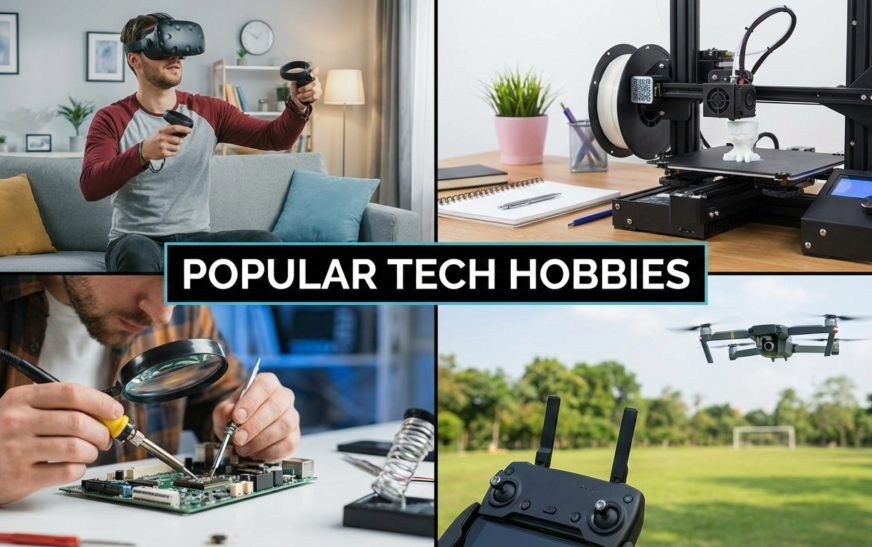
In our distraction-filled world, certain popular tech hobbies offer a surprising antidote: deep focus. Activities like soldering intricate circuits, calibrating a 3D printer, or writing clean, efficient code require a state of flow that quiets external noise. This isn’t passive scrolling; it’s active, mindful creation. The process of debugging a program or getting a print setting just right teaches patience and resilience. The tangible or digital outcome provides a deep sense of accomplishment that ephemeral online consumption simply cannot match. These hobbies rewire your relationship with technology, transforming it from a source of distraction into a tool for purposeful creation and present-moment engagement.
The Narrative Engineer: Building Worlds with AI
One of the most profound developments is the rise of AI as a creative collaborator. Platforms now allow you to become a “narrative engineer,” co-creating interactive stories, dynamic characters, and entire fictional universes. You’re not just writing a story; you’re designing the rules, personalities, and branching possibilities of a world, then watching as an AI brings it to life in unexpected ways. This hobby sits at the intersection of creative writing, game design, and computer science, fostering systems thinking and narrative logic. It democratizes the act of world-building, once the domain of large studios or published authors, and puts it in the hands of any storyteller with a vision.
The Social Fabric of Digital Hobbies: Connection in the Code
Contrary to the stereotype of the solitary tech enthusiast, modern tech hobbies are deeply social and collaborative. The community aspect is often what sustains and enriches the hobby itself.
Open-Source Collaboration: Building Together
The ethos of open-source projects exemplifies this. Whether it’s contributing to a piece of software, designing a 3D model to be shared freely, or documenting a solution to a technical problem on a forum, these hobbies are built on a foundation of shared knowledge. Platforms like GitHub are not just tools; they are social networks for developers. You can work asynchronously with people across the globe on a project that solves a real problem or creates something beautiful. This teaches version control, collaborative workflow, and the rewarding cycle of contributing to a commons that benefits everyone.
From Local Meetups to Global Jams
The social experience extends into the physical world through maker fairs, hackathons, and local meetups. A “game jam,” where developers, artists, and musicians gather (in-person or online) to create a game from scratch in 48 hours, is a whirlwind of creative synergy. Similarly, local makerspaces provide access to tools like laser cutters and CNC machines, but more importantly, they provide a community of mentors and peers. These events turn individual learning into a team sport, forging friendships and professional networks through shared, intense, creative effort.
Tangible Tech: The Joy of Physical-Digital Hybrids
While much of our lives exist on screens, a powerful trend in tech hobbies involves projects that bridge the digital and physical worlds, producing satisfying, tangible results.
The Internet of (Fun) Things
Using accessible microcontrollers like Arduino or Raspberry Pi, hobbyists create smart, interactive objects. This could be as whimsical as a motorized plant that turns to follow the sun, a custom LED lighting system synchronized to music, or an automated system for caring for houseplants. These projects blend basic electronics, programming, and physical crafting. The joy comes from writing code that then causes something in the real world to move, light up, or respond—a powerful feedback loop that makes abstract programming concepts immediately concrete and understandable.
Citizen Science and Biohacking
Perhaps one of the most futuristic frontiers is the DIY biology and citizen science movement. Enabled by cheaper lab equipment and shared protocols online, curious individuals are exploring molecular gastronomy, testing environmental samples, or even engineering yeast at home. While responsible practice and safety are paramount, this hobby represents the ultimate democratization of science. It allows non-professionals to participate in genuine inquiry and experimentation, fostering a deep understanding of biology and the scientific method through direct, hands-on engagement with the building blocks of life.
Conclusion: Your Gateway Awaits
The landscape of popular tech hobbies is no longer a siloed field for experts. It is a vast, accessible, and deeply human playground for creativity, focus, and connection. The common thread is the shift from passive consumption to active creation, using technology as your brush, your chisel, or your pen.
The best way to start is not to aim for mastery, but to embrace curiosity. Pick one project that makes you think, “I wonder if I could do that.” Let the frustration of a failed print or a buggy line of code be part of the journey, not a barrier. The resources, tutorials, forums, free software, and supportive communities are already at your fingertips. Your new hobby isn’t just waiting to be found; it’s waiting to be built, coded, written, and shared by you.
I hope this perspective offers a fresh look at the potential of tech hobbies. If a particular area like microcontroller projects or citizen science piques your interest, I can help you find specific, safe, and beginner-friendly resources to take your first step.