
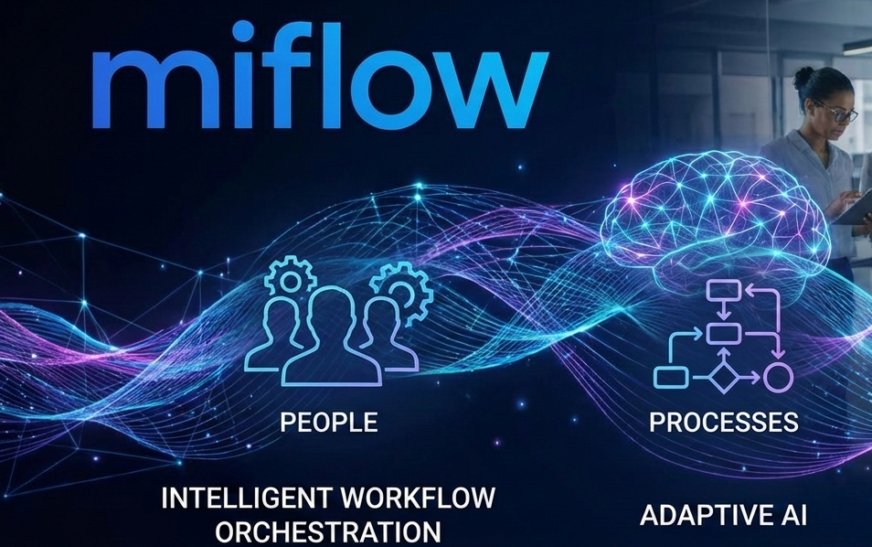
Businesses today demand faster decisions, leaner operations, and frictionless collaboration. One name is rising fast to meet that demand: miflow This platform sits at the intersection of artificial intelligence, process automation, and human-centered design. It does not just improve productivity. miflow fundamentally changes how organizations manage and scale their workflows.
Digital transformation is no longer a buzzword in 2026. Companies now treat it as a survival strategy. Teams across healthcare, finance, logistics, and creative industries all search for tools that reduce manual overhead, surface real-time insights, and connect fragmented departments. miflow answers this call directly. Its AI-driven ecosystem scales from solo entrepreneurs to global enterprise deployments with equal effectiveness.
1. What Is miflow ? Understanding the Core Platform
The Core Concept
miflow is an intelligent workflow orchestration platform. Its primary goal is to bridge the gap between people, processes, and technology. Legacy workflow tools rely on rigid, pre-programmed logic trees. miflow takes a different path. It employs adaptive AI models that learn from usage patterns, predict bottlenecks, and recommend optimizations in real time.
The Three Foundational Pillars
The platform rests on three core pillars that work together:
• Smart Workflow Builder: A visual, no-code drag-and-drop interface. Machine learning suggestions guide users toward industry best practices during the design phase.
• Intelligent Process Engine: A backend AI layer that monitors live processes and identifies inefficiencies. It reroutes tasks autonomously to maintain optimal throughput without human intervention.
• Unified Data Hub: A centralized data layer that pulls information from third-party tools such as CRMs, ERPs, and communication platforms. It creates unified dashboards and supports natural language querying for deep analytics.
Why miflow Stands Apart
Most conventional BPM (Business Process Management) tools simply execute tasks. miflow goes further. The system understands the purpose behind each workflow step. This contextual intelligence enables genuinely meaningful automation. Users get smarter results, not just faster ones.
Teams also appreciate miflow low adoption barrier. A non-technical manager can build a fully automated approval workflow in under an hour. Meanwhile, a developer can tap the same platform to architect complex, multi-system integrations. This dual accessibility makes miflow rare in the enterprise software market.
2. miflow and Today’s Most Powerful Technology Trends
miflow does not exist in a vacuum. Its design philosophy responds directly to the technology mega-trends reshaping industries in 2025. Here is how the platform aligns with each major shift.
2.1 The Rise of Agentic AI
Agentic AI reached maturity in 2025. These AI systems plan multi-step tasks autonomously and make decisions with minimal human oversight. miflow embraces this shift through embedded AI agents. Each agent can own entire workflow segments. The agent pulls data, triggers actions across connected tools, and resolves common exception cases on its own. Only genuinely ambiguous decisions reach human managers. This reduces cognitive load on teams and accelerates execution velocity significantly.
2.2 Hyper-Personalization at Scale
Modern enterprises cannot operate on one-size-fits-all processes. miflow personalization engine studies how individual users interact with their workflows. Each person then receives a customized interface, tailored task priority view, and a notification cadence matched to their working style. Enterprises previously reserved this level of personalization for consumer apps. Now it powers operational tools too. The result is higher adoption rates and faster task completion across teams.
2.3 Real-Time Collaboration Infrastructure
Hybrid work permanently altered team dynamics. Employees now collaborate across time zones, devices, and departments every day. miflow collaboration layer supports simultaneous workflow editing, live commenting, and video-embedded process reviews. Asynchronous handoff protocols ensure no task falls through the cracks. The platform also integrates with major communication tools. This transforms workflows from static documents into living, interactive operational threads.
2.4 Security-First Architecture
Cyber threats grow more sophisticated every year. Organizations now demand platforms where security forms the foundation, not an afterthought. miflow ships with end-to-end encryption for all workflow data. Role-based access control operates at a granular level. Compliance-ready audit trails satisfy GDPR, HIPAA, and SOC 2 requirements. An anomaly detection layer flags unusual access patterns early. This security posture makes miflow viable for healthcare, legal, and financial services organizations.
3. Key Features That Set miflow Apart
miflow feature set explains its rapid traction across industries. Enterprise users consistently highlight five capabilities above all others:
1. Natural Language Process Design: Describe any workflow in plain English. miflow AI generates the automation blueprint automatically. Non-technical teams can now build powerful automations without writing a single line of code.
2. Predictive Analytics Dashboard: miflow surfaces forward-looking insights up to 14 days in advance. Users see projected workload spikes, resource shortfalls, and deadline risks before they become problems.
3. Cross-Platform Native Integrations: Over 300 pre-built connectors cover Salesforce, HubSpot, SAP, Slack, Google Workspace, Microsoft 365, and Jira. These eliminate the integration headaches that slow most enterprise software rollouts.
4. Dynamic SLA Management: miflow enforces Service Level Agreements automatically within each workflow. Escalation paths, customer notifications, and management alerts trigger in real time when SLA thresholds approach.
5. White-Label Capability: Technology vendors and consultancies can deploy miflow under their own brand. Partners deliver customized workflow solutions to their clients without building infrastructure from scratch.
Together, these features form a toolkit built for modern business realities: distributed teams, data-driven decisions, and constant pressure to deliver more with less.
4. Industry Applications: Where miflow Delivers Real Results
miflow versatility means its impact spans every major sector. Organizations across industries use it to solve specific, high-stakes operational challenges.
Healthcare
Healthcare teams use miflow to manage patient intake workflows and automate insurance claim processing. Multi-department care pathways run smoother when a central system coordinates each handoff. Regulatory compliance documentation completes on schedule. Removing manual handoffs cuts administrative error rates. Patient experience scores climb as a direct result.
Financial Services
Banks and financial institutions rely on miflow to power KYC (Know Your Customer) onboarding. Transaction monitoring alert triage runs automatically. Loan approval pipelines move faster and with greater consistency. Compliance teams manage audit trails with precision they could not achieve manually. Delays cost money in this sector, and errors invite regulatory penalties. miflow reliability makes both outcomes far less likely.
E-Commerce and Retail
Retail operations demand constant coordination across many moving parts. miflow handles the full order fulfillment sequence: inventory checks, vendor communications, shipping logistics, return processing, and post-purchase follow-ups. Every step runs inside a single intelligent environment. Teams gain full visibility and eliminate the gaps that slip between disconnected systems.
Technology and Software Development
Software teams use miflow to manage sprint planning and automate code review assignments. QA handoffs happen on schedule. Post-deployment monitoring protocols run consistently across every release cycle. Engineering leads report fewer dropped tasks and faster release cadences after adopting the platform.
5. The Future Roadmap: Where miflow Is Heading
miflow vision extends well beyond the current platform. Three major developments will define its next evolution.
Multimodal Workflow Inputs
Future versions of miflow will accept voice commands as workflow triggers. Image recognition will let the platform automatically process scanned documents and photos of physical assets. IoT sensor data will feed directly into operational workflows. These capabilities will bring miflow into manufacturing, construction, and supply chain environments at a fundamentally deeper level.
Embedded Generative AI Assistants
Users will hold intelligent conversations with their workflow data. Ask a natural question such as ‘Which workflows underperformed this quarter and why?’ and miflow will deliver a detailed, context-aware explanation. Recommended remediation actions will appear alongside the analysis. All of this happens inside the miflow interface without switching to an external tool.
Decentralized Workflow Governance
Blockchain technology is maturing in enterprise contexts. miflow is exploring immutable workflow audit trails built on distributed ledger infrastructure. These trails provide tamper-proof records for inter-organizational processes. Supply chain management and multi-party contract execution stand to benefit most from this development.
FAQS
Q: What makes miflow different from tools like Zapier or Monday.com?
A: Zapier and Monday.com excel at task automation and project management. miflow operates at a different level. Its embedded agentic AI layer actively learns from your workflows, predicts issues before they surface, and optimizes process routing autonomously. The platform targets enterprise-grade complexity and compliance requirements. Think of it as a deep operational system rather than a task automation utility.
Q: Is miflow suitable for small businesses, or only large enterprises?
A: miflow serves both. Its tiered architecture scales gracefully from small teams to multinational corporations. Small businesses gain access to an intuitive no-code builder and affordable starter plans. Enterprises unlock advanced AI features, multi-department governance, and enterprise security controls. The platform grows alongside your organization, so you never need to migrate to a different tool as complexity increases.
Q: How does miflow handle data privacy and compliance?
A: Data privacy sits at the foundation of miflow architecture. The platform supports GDPR and HIPAA compliance configurations out of the box. It offers data residency options for regional storage requirements. End-to-end encryption protects data both in transit and at rest. Immutable audit logs capture every workflow action. Compliance officers can generate regulatory reports directly from the platform without requiring additional tooling.
Q: What technical expertise does implementing miflow require?
A: Non-technical users can build powerful workflows using the visual builder and natural language design features. For deeper customizations, miflow exposes a comprehensive developer API. Teams can build custom integrations and webhook-based triggers without waiting for platform updates. Both paths work well — technical and non-technical teams operate effectively within the same environment.
Q: Can miflow integrate with existing enterprise systems like SAP or Salesforce?
A: Yes. miflow offers over 300 native integrations covering SAP, Salesforce, Microsoft Dynamics, Oracle, HubSpot, ServiceNow, and many more. Systems outside the native list connect through miflow universal API connector. Building these custom integrations requires no platform updates from the miflow team, giving IT departments full control over their integration roadmap.
Q: How does miflow AI learn from my organization’s specific workflows?
A: miflow uses a federated learning approach. AI models train on your organization’s workflow data inside your own environment. Your data never leaves your infrastructure to train shared global models. Over time, the system builds a proprietary intelligence layer unique to your organization. Predictions and recommendations become increasingly accurate as the platform learns your specific operational patterns.
Conclusion: miflow as the Operating System for the Intelligent Enterprise
The 2026 technology landscape runs on velocity, complexity, and relentless efficiency demands. Operational infrastructure is no longer a back-office concern. It now drives competitive advantage directly.
miflow represents more than another entry in the workflow automation market. It defines a new category: the intelligent workflow operating system. Automation, AI-driven optimization, real-time collaboration, and enterprise security unite inside a single coherent platform. Organizations gain tools that help them work smarter, not just faster.
Immediate usability combined with long-term strategic depth makes miflow rare. A solo operations manager can build their first automated process in under an hour. At the same time, a multinational corporation can run cross-departmental workflows at scale on the same infrastructure. Few platforms offer that range without compromise.
Agentic AI continues to mature. Hybrid work is now permanent. Data complexity grows exponentially each year. Organizations that invest in intelligent workflow infrastructure today will lead their industries tomorrow. miflow is not simply ready for that future. It actively builds it.
Whether you evaluate miflow for the first time or deepen an existing deployment, one principle holds: your workflows are your strategy. miflow is how you execute it with precision, speed, and intelligence.