
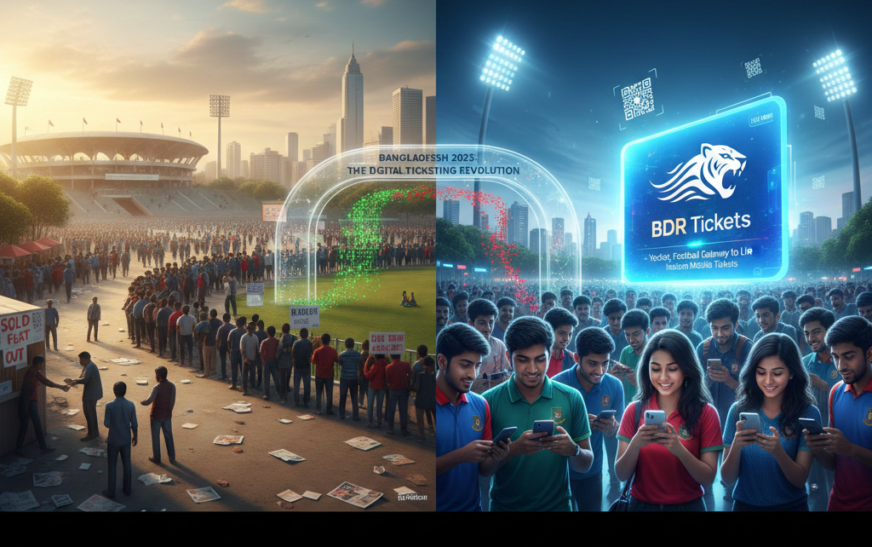
Bangladesh is at a fascinating crossroads. A nation of over 170 million people with a deep-rooted passion for cricket, football, and kabaddi is now witnessing a technological revolution in the way its fans experience live events. The ticket selling platforms bangladesh once dominated by long queues, black-market resellers, and last-minute chaos is being completely transformed by digital platforms, mobile applications, and e-commerce ecosystems.
From the electric atmosphere of the Sher-e-Bangla National Cricket Stadium in Dhaka to the packed stands of Sylhet International Cricket Stadium, the demand for event tickets has never been higher. And with smartphones now in the hands of more than 55 million internet users in the country, the conditions are perfect for a digital ticketing boom. In this article, we explore how ticket selling platforms are evolving in Bangladesh in 2025, what technologies are driving the change, and why the sports industry is at the heart of it all.
The Traditional Ticketing Problem in Bangladesh
For decades, buying a match ticket in Bangladesh meant navigating a maze of inconveniences. Fans would camp outside stadiums hours before ticket windows opened. Corruption and favoritism meant popular events sold out before genuine fans could purchase. Scalpers and middlemen thrived in the chaos, inflating prices to unreachable levels for ordinary spectators.
Even events outside sport concerts, cultural festivals, national celebrations suffered from the same challenges. There was no reliable central system. No accountability. No transparency. The experience of a passionate cricket fan trying to watch a Bangladesh vs. India ODI was frustrating at best, and impossible at worst.
This broken system created a clear opportunity: whoever could build a trustworthy, user-friendly digital ticketing solution for Bangladesh would instantly address a massive unmet need. And in 2024–2025, several platforms are doing exactly that.
The Rise of Digital Ticket Selling Platforms in Bangladesh
1. Shohoz The Pioneer of Online Ticketing
Shohoz is arguably the most well-known digital platform in ticket selling platforms bangladesh that handles event ticketing alongside its core bus, train, and launch booking business. Launched as a transport booking service, Shohoz gradually expanded into entertainment and sports ticketing. Their platform allows users to browse events, select seats, and pay through bKash, Nagad, cards, and mobile banking making it accessible even to users without traditional bank accounts.
Their 2024 integration of QR-code-based entry verification at sports venues was a landmark step. Instead of paper tickets that could be forged or lost, digital QR codes stored in a user’s smartphone became the entry pass. Stadium security staff equipped with scanners could validate tickets instantly, reducing fraud and crowd mismanagement significantly.
2. Ticketbd A Sports-First Platform
Ticketbd positions itself as a dedicated event and sports ticketing platform built specifically for Bangladeshi audiences. It has handled ticketing for Bangladesh Premier League (BPL) cricket matches, club football tournaments, and major concerts. The platform features a clean, mobile-optimized interface with real-time seat availability mapping, dynamic pricing, and e-ticket delivery directly to users’ mobile numbers.
What sets Ticketbd apart is its focus on the local sports ecosystem. Its partnership with the Bangladesh Cricket Board (BCB) and club football associations means it has become the official or semi-official channel for several high-demand events. For sports fans, this is the closest Bangladesh has come to a platform like BookMyShow in India or Ticketmaster globally.
3. bKash and Nagad as Embedded Ticketing Ecosystems
While not ticketing platforms by definition, bKash and Nagad Bangladesh’s two dominant mobile financial services (MFS) have become critical infrastructure for ticket selling. Their super-app ambitions have led both platforms to integrate event discovery and ticketing features. In 2024, bKash launched limited-edition event passes for major cricket fixtures directly within its app, letting users purchase tickets without leaving their primary financial application.
This embedded approach is deeply important in a market where financial inclusion is still evolving. Many Bangladeshis do not use credit cards or international payment gateways, but virtually all smartphone users in urban Bangladesh have a bKash or Nagad account. By embedding ticketing into MFS platforms, the industry dramatically expands its potential audience.
Technology Trends Powering the Ticketing Revolution
Mobile-First Design and Low-Data Interfaces
One of the most critical design considerations for ticket platforms in Bangladesh is mobile-first accessibility. With most users accessing the internet through 4G mobile connections rather than broadband, platforms have invested heavily in lightweight apps and progressive web apps (PWAs) that function smoothly on mid-range Android smartphones with limited data.
Low-data modes, offline ticket storage, and SMS-based confirmation systems ensure that even users in semi-urban or rural areas can participate. When a cricket match in Chittagong draws fans from across the country, the platform must work for everyone not just those in Dhaka with a strong internet connection.
AI-Powered Dynamic Pricing and Demand Forecasting
Advanced ticket platforms are increasingly using machine learning algorithms to set dynamic prices based on demand signals. When a Bangladesh vs. Pakistan T20 is announced, algorithms analyze search trends, historical purchase data, and social media sentiment to predict demand spikes. Prices may start moderate and increase as availability drops a model already common in global aviation and adopted by ticketing giants like Live Nation.
For Bangladesh’s sports market, this is still emerging technology, but forward-thinking platforms are testing demand-based pricing for premium seating categories, particularly for high-profile cricket fixtures that generate enormous fan interest.
| “The future of event ticketing in Bangladesh lies in platforms that blend trust, accessibility, and real-time technology turning every smartphone into a gateway to live sports.” Sports Tech Observer, 2025 |
Blockchain and NFT-Based Tickets
While still in early stages for Bangladesh, blockchain-based ticketing is gaining conceptual traction. NFT tickets non-fungible tokens tied to a specific seat and event offer a solution to the forgery and scalping problems that have long plagued the market. Each NFT ticket is unique, verifiable on a public ledger, and can be programmatically restricted from resale above face value.
In 2025, tech-forward startups in Bangladesh have been exploring pilot programs around blockchain ticketing for smaller niche events. While mass adoption for cricket or football matches remains years away, the foundation is being laid. Global examples such as the NFL’s use of blockchain verification and European football clubs issuing NFT fan passes are providing inspiration and blueprints.
Real-Time Seat Mapping and AR Stadium Previews
Modern ticketing platforms are going beyond simple seat number listings. Interactive 3D stadium maps let users preview their view from any seat before purchasing. Some platforms are incorporating augmented reality (AR) features that let fans point their camera at a stadium model and visualize their experience from a chosen seat angle.
While this technology is more prevalent in Western markets,ticket selling platforms bangladesh Bangladesh-focused platforms are beginning to incorporate basic interactive seat maps for major venues like the Sher-e-Bangla National Stadium. As smartphone hardware improves and development costs drop, more immersive previews will become standard.
Sports as the Catalyst: Cricket, Football, and Beyond
Cricket: The Crown Jewel of Bangladeshi Sports Ticketing
Cricket is unquestionably the driving force behind ticket selling platforms bangladesh. When the Bangladesh Tigers play at home especially against India, Pakistan, or Australia demand for tickets reaches unprecedented heights. The 2023–24 home series against multiple teams saw digital ticketing platforms crash under server load, underscoring both the massive appetite and the need for scalable infrastructure.
The Bangladesh Cricket Board has progressively pushed toward official digital channels for ticket distribution, reducing the proportion of physical tickets available at stadium windows. This shift protects fans from scalpers and generates valuable data about who is buying tickets, when, and from where.
Bangladesh Premier League (BPL): A Franchise Model Driving Demand
The BPL has evolved into a major entertainment product with franchise teams, international star players, and prime-time television coverage. This has elevated ticket demand for BPL games considerably. Multiple franchises have partnered with digital platforms to offer season passes, group bookings, and membership cards with priority ticket access all managed through app-based ecosystems.
The data generated from BPL ticketing which demographics buy tickets, which matchups drive spikes, which days see slower sales is becoming a business intelligence asset for both the franchises and platform operators.
Football: The Growing Challenger
While cricket dominates, football in Bangladesh is experiencing a genuine revival. The Bangladesh Football Federation (BFF), club competitions like the Bashundhara Kings vs. Sheikh Russel KC fixtures, and increased investment in youth infrastructure are creating a growing football fan base. Ticket platforms are beginning to treat football as a serious revenue segment, with dedicated sections, club fan integrations, and social media-driven ticket drops for high-demand fixtures.
Kabaddi, Wrestling, and Emerging Sports
Bangladesh has a rich tradition in contact sports like kabaddi and traditional wrestling (Kushti). As these sports receive more organized competition formats and media coverage, ticketing platforms are beginning to serve these events too. Niche sports audiences may be smaller, but they represent an important expansion of the ticketing ecosystem beyond the cricket-centric model.
Challenges Facing Ticket Selling Platforms in Bangladesh
Despite the momentum, several challenges persist that platforms must navigate carefully to reach their full potential.
Digital Literacy and Trust Barriers
A significant portion of Bangladesh’s population, particularly older generations and those in rural areas, remains skeptical of online transactions. Stories of online fraud, failed payments, and undelivered services create hesitation. Building trust through reliable customer service, guaranteed refund policies, and clear communication remains an ongoing challenge.
Payment Infrastructure Limitations
While bKash and Nagad have dramatically expanded financial access, international payment cards remain limited. Platforms that want to serve global Bangladeshi diaspora fans purchasing tickets for events back home must navigate complex currency and payment gateway constraints.
Counterfeit Ticket Problem in Physical Channels
Even as digital ticketing grows, a parallel physical market still exists. Counterfeit paper tickets and fraudulent resellers remain a problem at major events. Platforms must not only serve digital customers but also advocate for and support venue-wide digital verification systems that make physical forgeries obsolete.
Server Scalability During Peak Demand
When a high-demand cricket match goes on sale, platforms can experience millions of simultaneous access requests within minutes. Building cloud infrastructure that can scale elastically for these peak moments and then scale down during quieter periods requires significant technical investment that smaller platforms struggle to afford.
The Future: What 2026 and Beyond Holds for Ticketing in Bangladesh
The trajectory is unmistakably upward. Several developments point to a vibrant future for ticket selling platforms bangladesh
Super-app consolidation is likely to accelerate, with major platforms like Pathao, Shohoz, and bKash competing to become the default ticketing destination. International partnerships with global companies like Ticketmaster, Eventbrite, or regional players may bring foreign investment and technical expertise to the sector.
The arrival of 5G connectivity in Bangladesh’s major cities will eliminate latency barriers, enabling real-time, high-resolution seat selection experiences, live streaming integrations within ticketing apps, and seamless digital payment flows. Fans may soon be able to purchase tickets, order food delivery to their seat, and access instant replays all within a single platform ecosystem.
AI-driven personalization will also define the next phase. Platforms that understand a user’s favorite teams, preferred seating categories, and budget will proactively surface the right events at the right time transforming ticketing from a transactional experience into a fan engagement engine.
Conclusion
ticket selling platforms bangladesh are no longer a novelty; they are becoming the backbone of how millions of fans connect with the sports and events they love. From Shohoz and Ticketbd to the embedded ticketing capabilities of bKash and Nagad, the ecosystem is growing rapidly, powered by smartphone adoption, mobile financial services, and an insatiable appetite for live cricket and football.
The challenges are real trust, infrastructure, scalability, and digital inclusion all require sustained attention. But the potential is extraordinary. Bangladesh is a young, digitally-hungry nation with a sports culture that runs deep. As platforms improve their technology, expand their partnerships, and earn the trust of millions of fans, the days of standing in queues outside stadium gates are numbered.
For sports fans, entrepreneurs, and investors alike, Bangladesh’s ticketing industry in 2026 represents one of the most exciting frontiers in South Asian digital commerce. The game is not just being played on the field it is being won in the app.