
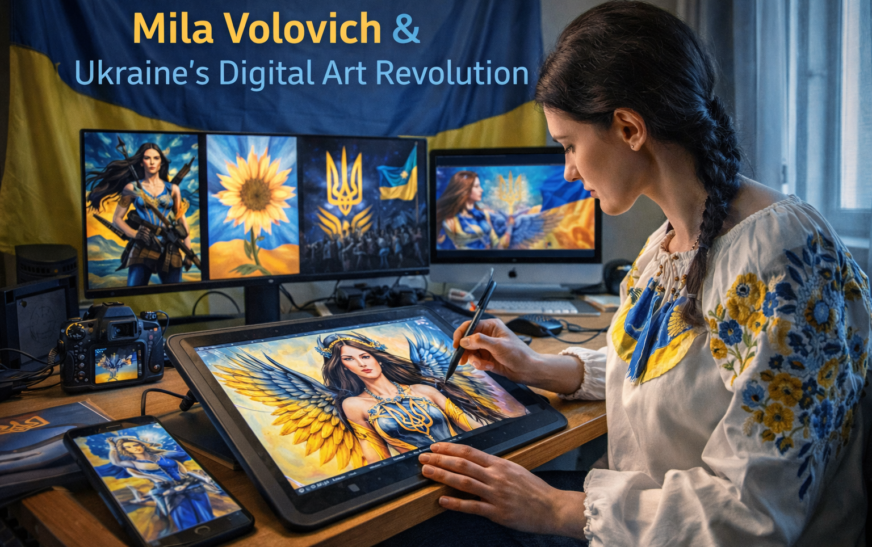
A new generation of digital artists is rewriting the rules of creative expression and Ukraine is at the center of that shift. Names like Mila Volovich are becoming touchstones in conversations about digital art in Ukraine, representing a broader wave of creators who fuse cultural depth, technical fluency, and raw creative ambition into work that resonates far beyond Eastern Europe. These artists are not simply adopting new tools. Understanding this movement means understanding both its origins and its direction.
The Cultural Soil: Why Ukraine Produces Distinctive Digital Artists
A Legacy of Visual Intensity
Ukrainian visual culture has long carried a particular intensity. From the geometric boldness of Hutsul folk art to the monumental Soviet-era murals that still mark Kyiv’s metro stations, the country’s aesthetic heritage is built on contrast, bright against dark, intricate against stark, intimate against vast. Digital artists emerging from this environment carry those contrasts into their work instinctively. They are not importing Western minimalism or imitating Silicon Valley aesthetics. They are translating something older and harder-earned into pixels, code, and light.
Adversity as Creative Catalyst
The pressures of the past several years have sharpened rather than silenced Ukrainian creative voices. Artists working under conditions of genuine uncertainty power cuts, displacement, the constant background noise of conflict have developed a relationship with impermanence that gives their digital work unusual emotional weight. Furthermore, the shift to digital practice was, for many, a practical necessity: digital tools travel, survive, and function in ways that physical studios cannot always guarantee. As a result, an entire generation accelerated its command of digital platforms not as a lifestyle choice but as an act of creative survival.
Artistic Vision and Core Contributions of Ukraine’s Digital Creative Wave
Storytelling Through Algorithmic Tools
The Ukrainian digital artists gaining international attention a cohort that figures like Mila Volovich represent in the broader cultural conversation share a commitment to storytelling that goes beyond surface aesthetics. They use generative AI not as a shortcut but as a collaborator. The outputs carry cultural fingerprints that distinguish them sharply from the generic AI aesthetics flooding global feeds.
Digital storytelling algorithms on platforms like TikTok and Instagram Reels reward emotional resonance and pacing. Ukrainian creators have proven adept at structuring visual narratives that perform well algorithmically while maintaining artistic integrity a balance that many Western creators struggle to achieve. Consequently, their content reaches audiences far larger than their follower counts would traditionally predict, as engagement rates trigger wider distribution.
Cultural Fusion and the Post-Soviet Aesthetic
This cultural fusion produces work that is visually distinctive in any global feed.
Community Impact and Collective Practice
The AI creative influencer model, as practised by this generation of Ukrainian digital artists, differs from the solo-brand approach dominant in Western creator culture. Collective platforms, shared resource pools, and openly collaborative project structures are common. Discord servers and Telegram channels function as studios, critique spaces, and distribution networks simultaneously. In addition, many artists in this wave maintain active mentorship relationships with younger creators still based in Ukraine, creating knowledge pipelines that sustain the movement even as individual members relocate or travel.
Mila Volovich and the Era of Digital Creativity: Recent Technologies at Play
Generative AI and Personal Visual Language
By early 2026, the generative AI landscape has stratified significantly. Early-stage tools that produced impressive but generic outputs have been succeeded by fine-tunable models that artists can train on their own visual archives. For Ukrainian digital creators, this capability is transformative. An artist can now build a model that generates new work in her own developed style consistent in color theory, compositional logic, and symbolic vocabulary without replicating any specific piece. The Mila Volovich archetype in digital art Ukraine represents this approach: a personal visual language made scalable through AI, not diluted by it.
However, the ethical dimensions of this practice are genuinely complex. When an AI model is trained on an artist’s work, questions of authorship, originality, and creative labor become difficult to resolve cleanly. The Ukrainian digital art community has engaged these questions more openly than many Western counterparts, partly because the stakes of cultural ownership feel more immediate in a context where external forces have long contested Ukrainian cultural identity.
AR/VR Installations and Immersive Experience Design
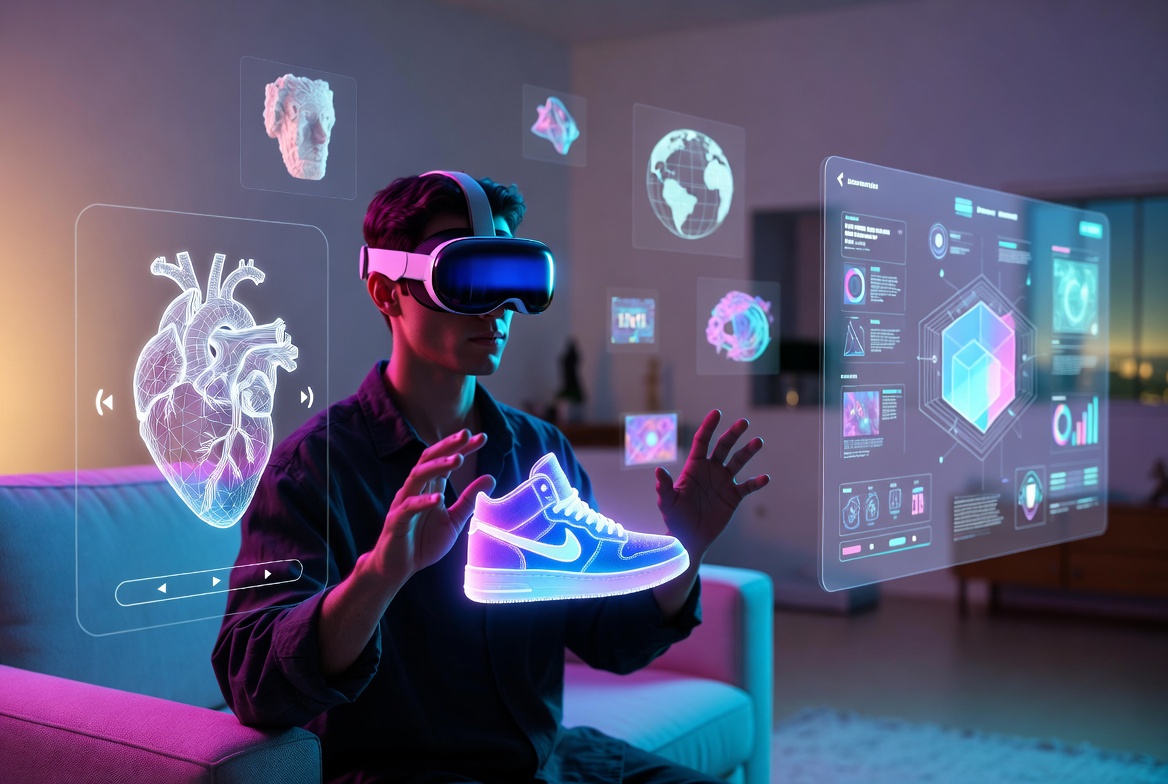
Augmented and virtual reality have moved from novelty to serious creative medium in the period from 2024 to 2026. Ukrainian artists have been early adopters of accessible AR tools notably Meta Spark, Apple’s Vision Pro development platform, and open-source WebXR frameworks to create immersive experiences that can be deployed without gallery infrastructure. A viewer anywhere in the world can point a phone at a printed image or a specific GPS coordinate and enter a layered visual environment.
The accessibility dimension of this shift is significant. Traditional VR art has been criticized for requiring expensive hardware that excludes most audiences. WebXR-based experiences run on mid-range smartphones, dramatically widening the potential audience for immersive digital art. Furthermore, Ukrainian artists distributing work through AR have bypassed the gallery system almost entirely, reaching audiences in cities where no physical exhibition of their work would be commercially viable.
Blockchain NFTs and New Ownership Models
The NFT market that exploded in 2021 and contracted sharply in 2022 and 2023 has matured into something more structurally interesting by 2026. Speculative flipping has largely given way to genuine collector communities and artist-supporter relationships built on blockchain transparency. For Ukrainian digital artists, NFT platforms offered something concrete and urgent: a way to monetize work outside of banking infrastructure that was disrupted by war, a way to receive direct international support, and a mechanism for establishing provenance in a field where copying is trivially easy.
Modern digital creativity in Ukraine uses blockchain not only for sales but for documentation. Immutable on-chain records of creation dates, process notes, and version histories provide a kind of artistic provenance that physical art has always relied on institutional memory to maintain.
Algorithmic Distribution and Platform Strategy
Understanding how algorithmic content distribution works is now as fundamental to a digital artist’s practice as understanding color theory. Ukrainian creators in this wave have developed sophisticated platform strategies, using short-form video to drive awareness, long-form content to build depth, and newsletter platforms like Substack to maintain direct audience relationships that algorithm changes cannot disrupt.
Modern Projects Collaborations and Global Relevance
The global relevance of Ukrainian digital art has been recognised by institutions that were slow to engage with digital practice generally. The Venice Biennale’s digital programming, Art Basel’s online viewing rooms, and major auction houses’ digital art departments have increasingly featured Ukrainian creators since 2023. Collaborative projects between Ukrainian digital artists and European cultural institutions have produced residencies, commissions, and co-productions that would have been difficult to imagine a decade ago.
Furthermore, the Ukrainian diaspora in cities such as Berlin, London, Warsaw, and Toronto has created local nodes of creative activity that amplify its global reach. Artists maintain dual presences engaged with the Ukrainian cultural conversation online while embedded in the creative economies of their current cities.
Challenges Opportunities and Future Outlook
The challenges facing Ukrainian digital artists are real. Connectivity disruptions affect production and distribution. Platform monetisation policies that favour creators in wealthy markets create structural disadvantages. The emotional labour of representing cultural trauma to global audiences who may engage with it superficially takes a genuine toll.
On the other hand, the structural advantages these artists have built are durable. Deep command of AI tools, sophisticated platform strategy, blockchain-native distribution infrastructure, and internationally networked communities give this creative wave capabilities that established art world players lack.The generation that Mila Volovich represents in the broader cultural shorthand is not arriving; it has arrived.
Conclusion
The story of Ukrainian digital artists like those represented by the name Mila Volovich is ultimately a story about creative resilience meeting technological possibility. These artists have taken tools designed in Silicon Valley or Shenzhen and given them a distinctly Eastern European voice. They have turned adversity into aesthetic depth, technical mastery into cultural specificity, and platform algorithms into distribution infrastructure for art that deserves the widest possible audience. For the global creative industry.